
Nouvelles des groupes
- Détails
- Publié par : Brad Nickerson
- Affichages : 6771
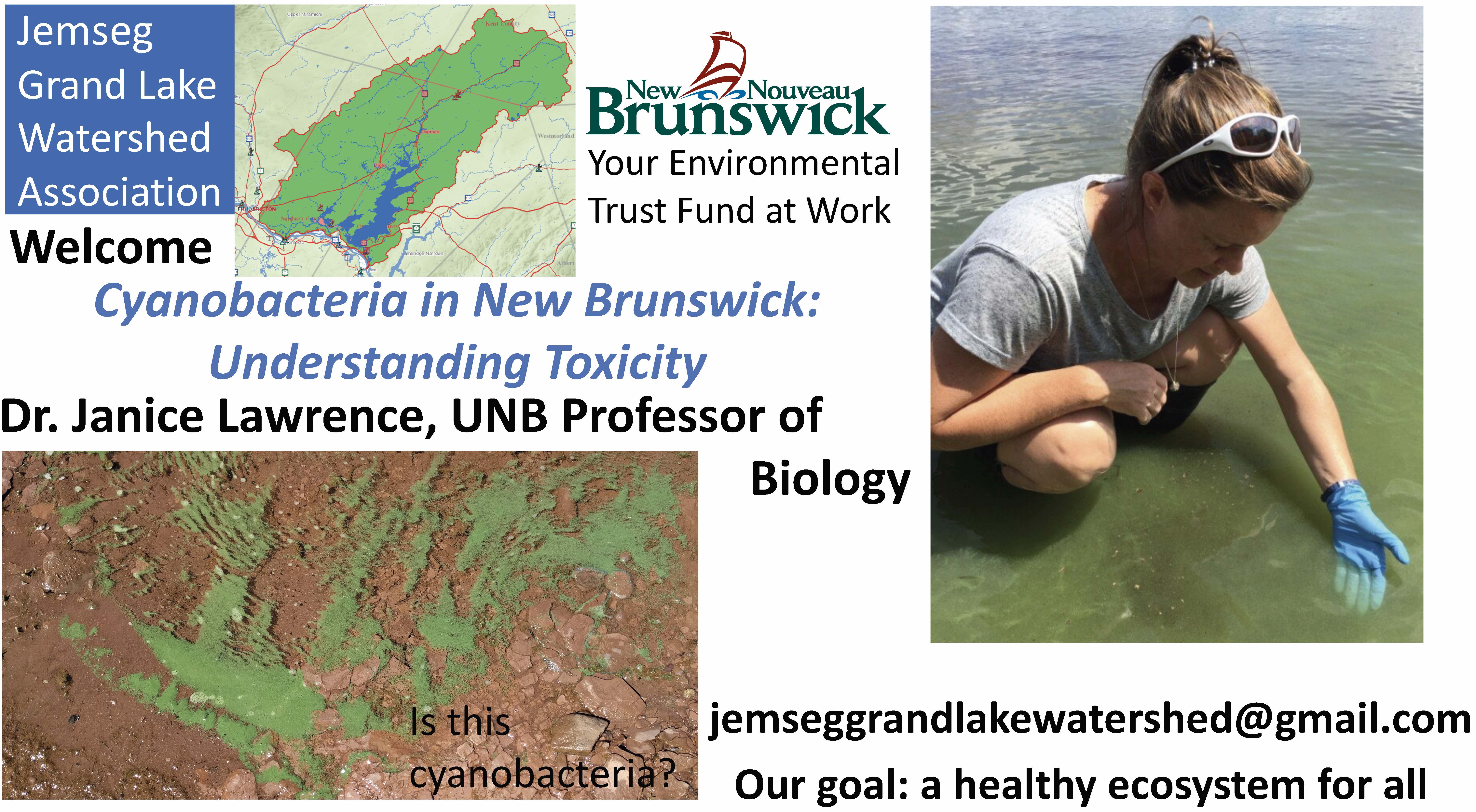
Take a break from Netflix, and watch this excellent video of a recent webinar with Dr. Janice Lawrence, a University of New Brunswick Professor of Biology. Learn about cyanobacteria and how genetic tools are being used to determine if cyanobacteria contain harmful cyanotoxins. Learn how harmful cyanotoxins arise from cyanobacteria, why they are increasing in surface freshwater bodies in Canada, and what we are doing about it in New Brunswick.
Be sure to watch the video to the end as Dr. Lawrence does a superb job of answering questions from the webinar attendees. The online, recorded version of the July 16, 2020 webinar is now available at
https://youtu.be/VjRAT7FCwe8
Please share this description and online webinar with anyone you think might be interested.

- Détails
- Publié par : Alyssa MacFarlane
- Affichages : 7187
We are not going back to the broken economic model we had. We will not stand by helplessly as our small businesses struggle to stay alive. We have the solutions, we know they work, and they won't cost us one more cent than we spend right now..
- Détails
- Publié par : Annika Chiasson
- Affichages : 4746

- Détails
- Publié par : Jim Emberger
- Affichages : 7648
However, under the sponsorship of a different "RAVEN" group ("Respecting Aboriginal Values and Environmental Needs") - the tour has been redesigned as a 3-part webinar series.
"We are UnFrackable" – focuses on national resistance to LNG – aka fracked gas. Its goals are to share strategic approaches – from supporting Indigenous legal challenges, to divestment and de-funding campaigns – and to build an unbreakable alliance of action. The narrative peddled by government and industry is that LNG is “ethical”, “environmental”, and “economic”. The webinars will bring together fantastic expert guests and frontline activists to debunk that myth, while connecting the dots of resistance from coast to coast to coast.
The first webinar is FRIDAY APRIL 3 at 8 pm AT and is entitled: #WetsuwetenStrong and the Ethics of LNG, with Hereditary Chief Adam Gagnon and Mike Sawyer, COGC.
It will be an amazing opportunity to hear directly from Wet’suwet’en hereditary leader Chief Dsta’Hyl – Adam Gagnon, in conversation with Mike Sawyer of the Citizen’s Oil and Gas Council.
- Chief Gagnon is a member of the Likhts’amisyu clan who have launched legal challenges to protect their traditional territory from fracked gas pipelines. He will talk about the Constitutional and Charter challenge to Coastal Gas Link and other fossil projects on Wet’suwet’en territory, based on the equity rights of future generations in a time of climate crisis.
- Micheal Sawyer brings 30 years of extensive experience in Canadian regulatory and energy policy matters. Sawyer is no stranger to the power of citizen-driven justice: he’s famous for winning a court challenge against an LNG plant proposed for Lelu Island in BC: three weeks after that victory, the project was cancelled.
- Your host is Mary Lovell, a climate justice organizer that has been primarily organizing against tar sands, extreme oil, and the Trans Mountain project for eight years. Mary is a campaigner with RAVEN and Sierra Club BC.
This first webinar will touch on projects that may affect New Brunswick, but have been flying under the radar.
To sign-up for the webinar and/or find more information: https://raventrust.com/we-are-unfrackable-webinar-series/
We have also put up an event on Facebook: https://www.facebook.com/events/1269560153248578
Contact https://raventrust.com/we-are-unfrackable-webinar-series/
- Détails
- Publié par : Lynaya Astephen
- Affichages : 8153
- Détails
- Publié par : Margo Sheppard
- Affichages : 7692
This article appeared in the Daily Gleaner, Friday, January 24, 2020
How long before climate emergency gains traction?
Fredericton is under pressure to join the many hundreds of Canadian municipalities and federal government that have declared a climate emergency.
A Climate Emergency declaration is “a piece of legislation or directive putting a government or organization on record in support of emergency action to restore a safe climate.” (Climate Mobilization 2020)
With few indications of leadership at the provincial level in this province, local governments are being pushed to take the strongest possible action towards mobilization. So far Bathurst, Saint John, Moncton and Edmundston have done this. Are the declarations of climate emergency symbolic, without teeth? That depends on how much people hold Council members to account to living up to their words.
Declaring a climate emergency is the first step towards shifting governments into emergency mode to address this global crisis. The focus should include a healthy dose of carbon/greenhouse gas drawdown as well as public safety in adapting to the new norm of extended heatwaves, more violent weather events and possible food shortages. It should include City residents as well as corporate operations.
What would declaring a climate emergency change for Fredericton?
It would tell everyone, from environmental activist to electrical journeyman that this crisis is real, and that their personal actions—from choosing a new car to heating their homes—matter.
It would clearly say to our community, in turn percolating down to neighbourhoods, social groups etc. that you can either contribute to making things better in a framework where we are all working together, or you can choose to make things worse by your individual choices.
My guess is most of us would want to do the former.
Mobilizing to address the climate crisis takes everyone, everywhere with no exceptions. This is a crisis, even though when we get up the sun is still shining, there is still food on the table and heat in the house. We lead a fairly privileged life here in New Brunswick; we have so far avoided the impacts being felt in places like Australia or along the US southern border, where migrants fleeing economic and climate breakdown and crime are signs of things to come elsewhere (but not here, we secretly tell ourselves).
Talk to an emergency measures coordinator though, and the future picture in New Brunswick gets dark in a hurry. They are the ones buying houses on the hill, out of the floodplain, and worrying about social unrest and crime waves.
Providing a safe climate, irrespective of our own seemingly miniscule contributions to its deterioration, means maximizing protection for people and species with whom we share this Earth. Organizing isn’t solely in the wheelhouse of the professionals. Neighbourhoods, block parents, local food groups, seniors all have a role in both drawing down our carbon output as well as supporting adaptive measures to help us cope.
A Mayor’s task force on the climate emergency, or a committee similar to that on homelessness is in order. Council just had a perfect opportunity to direct surplus budget resources to climate, but did not. Instead, funds were put into Ignite Fredericton and immigration. Both of these are worthy, they are just not emergencies like the climate crisis.
Frederictonians are increasingly aware that something is amiss with the climate. By electing a Green Party MP in Jenica Atwin to represent us in Ottawa citizens have embraced the political party with a coherent and relevant plan to address the climate emergency—one that envisions a World War II scale mobilization starting now.
The effects of climate change aren’t going to stop. They’re going to overlap and get worse. What can seem an inconvenience today can become a major catastrophe in a heartbeat.
If you want people to act in an emergency, you have to act AS IF it’s an emergency. I want our city to be the public voice that makes people aware of their role and gets them out of their comfort zones. I want the city to start making climate adaptation and carbon drawdown a line item in every budget, not counting on staff to write grant applications for crumbs from the Feds.
And most of all, I want City Council to avoid taking decisions that compromise our climate resilience or endorse projects that add more emissions to an already overburdened atmosphere.
One wonders how bad things have to get before this climate emergency concept gets traction.
Margo Sheppard
Fredericton
