
Webinar SeriesiCAL Subscribe
Climate change is here, it is happening, and it is impacting New Brunswickers across the province and other Atlantic Canada residents. Nature-based and natural approaches to adapting to climate change focus on implementing infrastructure that restores and protects natural areas while removing greenhouse gasses from the atmosphere, reducing flooding and stormwater surge risks, and supporting biodiversity.
There is interest and support for nature-based climate solutions from residents (see public survey of opinion results here) and there are many examples of successful projects across the region (see maps of case studies Here). Municipalities, community organizations, and landowners, however, face many barriers and challenges to developing their own nature-based projects including access to funding, materials, knowledgeable contractors, native plants, and more.
Join the NBEN, CLIMAtlantic, and Nature NB for a seven-part webinar and discussion series throughout June and early July where we will hear from communities across the Atlantic Provinces who have implemented nature-based infrastructure. Let's learn from their experience to understand the challenges they encountered in the process, how they overcame those challenges, where they accessed the funds and resources, and what the results/successes of the projects have been. There will be opportunities to ask speakers your pressing questions and receive input and advice to surpass the challenges you might be facing in your communities.
This first webinar will delve into natural approaches to dune restoration in New Brunswick. Winds and waves deposit sand in coastal areas forming sand dunes, which are covered in vegetation overtime. Vegetation helps to prevent erosion of the dunes as well as acting as a barrier between the ocean and inland ecosystems like forests, wetlands, and salt marshes. Dune restoration involves restoring that crucial vegetation and developing unique ways to stabilize the sand dunes, whether it be through marram grass planting, re-using Christmas trees to aid stability, or more nature-based techniques.
Speakers:
Marion Tétégan Simon, VALORES Research Institute, Project Adaptation
Marion Tétégan Simon, Director of Research at VALORĒS obtained a Master's degree in Geosciences and Environment and a PhD in Soil Science in 2011. Since 2005, she has had a multidisciplinary career in innovation and applied research, working with academic institutions, communities and industries in France and Canada. She joined the VALORĒS research institute team in 2014. Since 2020, she manages and supervises the research poles at VALORĒS related to climate change adaptation of aquatic and terrestrial ecosystems as well as the valorization and restoration of natural, waste and coastal resources. Dr. Tétégan Simon and her research team work with communities and various industrial sectors to build resilience to climate change. For over 10 years, several initiatives in collaboration with municipalities on dune and beach erosion monitoring have been carried out by VALORĒS in the Acadian Peninsula as part of the Adaptation Péninsule Acadienne project. Also, since December 2020, she has been the New Brunswick representative on the Sustainable Development Advisory Council; with a mandate to provide advice to the Canadian Minister of Environment and Climate Change on sustainable development issues, in addition to reviewing and commenting on drafts of the Federal Sustainable Development Strategy (the official version of which has been available online since fall 2022).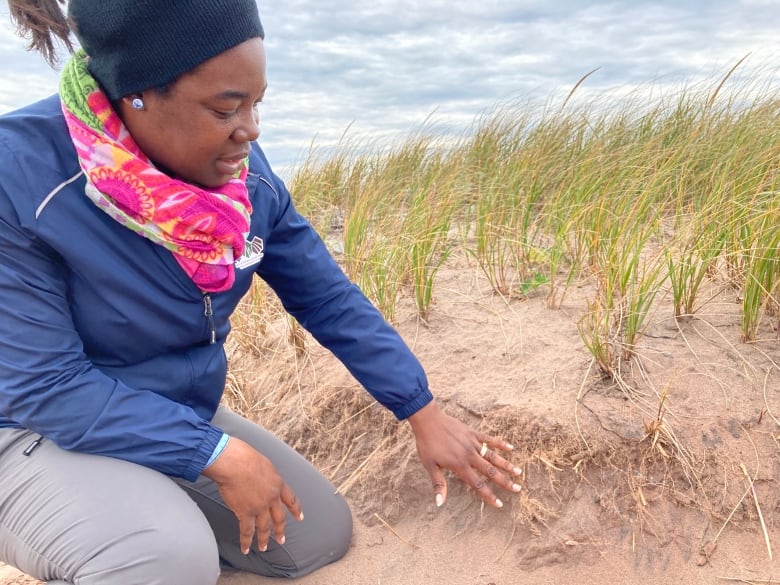
Julie Cormier, Executive Director, Vision H2O
Julie Cormier is the Executive Director of Vision H2O, the Cap-Acadie watershed group. She has been working with the group since 2011. Her work on the dunes began in her first year with the dune inventory project, which consisted of checking the condition of the dunes in the fall and doing restoration work in the spring. Her years on this project have allowed her to connect with coastal communities and see the incredible changes that have occurred on the coastline in a short period of time.
This webinar will be in French with English interpretation.
| Event Date | Jun-01-2023 1:00 pm - 2:00 pm |
| Categories | Webinar Series, Climate Change Adaptation Collaborative |
We are no longer accepting registration for this event
Climate change is here, it is happening, and it is impacting New Brunswickers across the province and other Atlantic Canada residents. Nature-based and natural approaches to adapting to climate change focus on implementing infrastructure that restores and protects natural areas while removing greenhouse gasses from the atmosphere, reducing flooding and stormwater surge risks, and supporting biodiversity.
There is interest and support for nature-based climate solutions from residents (see public survey of opinion results here) and there are many examples of successful projects across the region (see maps of case studies here). Municipalities, community organizations, and landowners, however, face many barriers and challenges to developing their own nature-based projects including access to funding, materials, knowledgeable contractors, native plants, and more.
Join the NBEN, CLIMAtlantic, and Nature NB for a seven-part webinar and discussion series throughout June and early July where we will hear from communities across the Atlantic Provinces who have implemented nature-based infrastructure. Let's learn from their experience to understand the challenges they encountered in the process, how they overcame those challenges, where they accessed the funds and resources, and what the results/successes of the projects have been. There will be opportunities to ask speakers your pressing questions and receive input and advice to surpass the challenges you might be facing in your communities.
This second webinar will delve into the development of rain gardens and bioswales to help with managing flooding. Rain gardens and bioswales are designed to manage rain and snowmelt runoff. Runoff during rain or snow melts is absorbed into the soil and eventually flows into water bodies and wetlands. Runoff often contains pollutants from animal excrement, bacteria from sewage, fertilizers, pesticides, sediments, and hydrocarbons, all of which provide risks to human and environmental health. A rain garden is comprised of deep-rooted grasses, flowers, and shrubs that tolerate wet and dry conditions in shallow landscape depressions. Bioswales are depressions with native plants, shrubs, and layers of soils that are engineered to complement conventional public storm water management systems and are often located next to roads or parking lots to help filter storm water run-off.
Speakers:
Jolyne Hébert, Executive Manager, Shediac Bay Watershed Association
Jolyne Hebert has over 10 years of experience with environmental NGOs in Southeastern New Brunswick. Since 2015, she began working towards the implementation of a stormwater management program in the Town of Shediac.
With funding from the NB Environmental Trust Fund and ECCC EcoAction program, she has led the development of stormwater management projects using green infrastructure in the Shediac Bay area. From rain gardens to bioretention systems, she promotes the use of plants and soil microbiome to tackle water quality issues related to pollution found in runoff.
This workshop will feature several of the projects she has created, from residential rain gardens to commercial bioswales.

Roxanne MacKinnon, Executive Director, ACAP Saint John
Roxanne MacKinnon is the Executive Director of ACAP Saint John and has years of experience working on water quality and aquatic habitat projects. She has a keen interest in connecting environmental issues with community members and inspiring people to take local action. In recent years, Roxanne has been actively involved in multiple rain garden projects from designing, to funding, to implementation and works with a dedicated team of staff and volunteers to implement natural climate change adaptation initiatives within the Greater Saint John Region. 
This webinar will be primarily in English with simultaneous French interpretation.
| Event Date | Jun-07-2023 12:00 pm - 1:00 pm |
| Cut off date | 07 June, 2023 12:00 pm |
| Categories | Webinar Series, Climate Change Adaptation Collaborative |
We are no longer accepting registration for this event
Climate change is here, it is happening, and it is impacting New Brunswickers across the province and other Atlantic Canada residents. Nature-based and natural approaches to adapting to climate change focus on implementing infrastructure that restores and protects natural areas while removing greenhouse gasses from the atmosphere, reducing flooding and stormwater surge risks, and supporting biodiversity.
There is interest and support for nature-based climate solutions from residents (see public survey of opinion results here) and there are many examples of successful projects across the region (see maps of case studies here). Municipalities, community organizations, and landowners, however, face many barriers and challenges to developing their own nature-based projects including access to funding, materials, knowledgeable contractors, native plants, and more.
Join the NBEN, CLIMAtlantic, and Nature NB for a seven-part webinar and discussion series throughout June and early July where we will hear from communities across the Atlantic Provinces who have implemented nature-based infrastructure. Let's learn from their experience to understand the challenges they encountered in the process, how they overcame those challenges, where they accessed the funds and resources, and what the results/successes of the projects have been. There will be opportunities to ask speakers your pressing questions and receive input and advice to surpass the challenges you might be facing in your communities.
This third webinar will be exploring how communities can ensure the longterm management and longevity of their nature-based infrastructure through mapping and management of natural assets, and preparing to respond to the effects of climate change. Infrastructure requires long term management and maintenance, and it can be challenging to know what is required to maintain nature-based infrastructure. Many communities across Atlantic Canada have worked to identify, value, and account for natural assets in their provision of municipal services. Management and maintenance plans are even more crucial in the face of climate change impacts, as communities often have to pivot and re-evaluate to respond to major storm events like Hurricane Fiona.
Speakers:
Dodick Gasser, CCNB-INOV, Grand Falls, NB
Dodick Gasser, Ph. D., Agr., M. Env., is a research scientist in applied ecology and environment with over 20 years of experience in applied research with organizations in forest ecology, silviculture, sustainable forest management, natural resources management, waste management, agriculture & land use planning. He has undertaken extensive environmental and agricultural research projects over his career. He leads a team that applies and develops several methodologies to characterize natural assets, assess ecosystem services and plan nature-based solutions.
Alistair Ozon, Water Coordinator, City of Charlottetown 
Alistair joined the City’s Environment and Sustainability Department in 2020 as the Water Coordinator. He completed an undergraduate degree in Environmental Science at Dalhousie University and has an Advanced Diploma in Water Quality from Memorial University’s Marine Institute. In his role with the City, he works with local watershed groups, academic institutions and other stakeholders on projects relating to watershed management, Charlottetown’s Ecological Pond Study, municipal natural asset management, living shorelines, and flood protection. Alistair also works with the Water & Sewer Utility to further water conservation measures and works to encourage low impact development practices in stormwater management
This webinar will be bilingual with interpretation.
| Event Date | Jun-14-2023 12:00 pm - 1:00 pm |
| Cut off date | 14 June, 2023 12:00 pm |
| Categories | Webinar Series, Climate Change Adaptation Collaborative |
We are no longer accepting registration for this event
Climate change is here, it is happening, and it is impacting New Brunswickers across the province and other Atlantic Canada residents. Nature-based and natural approaches to adapting to climate change focus on implementing infrastructure that restores and protects natural areas while removing greenhouse gasses from the atmosphere, reducing flooding and stormwater surge risks, and supporting biodiversity.
There is interest and support for nature-based climate solutions from residents (see public survey of opinion results here) and there are many examples of successful projects across the region (see maps of case studies here). Municipalities, community organizations, and landowners, however, face many barriers and challenges to developing their own nature-based projects including access to funding, materials, knowledgeable contractors, native plants, and more.
Join the NBEN, CLIMAtlantic, and Nature NB for a seven-part webinar and discussion series throughout June and early July where we will hear from communities across the Atlantic Provinces who have implemented nature-based infrastructure. Let's learn from their experience to understand the challenges they encountered in the process, how they overcame those challenges, where they accessed the funds and resources, and what the results/successes of the projects have been. There will be opportunities to ask speakers your pressing questions and receive input and advice to surpass the challenges you might be facing in your communities.
This fourth webinar will explore different hybrid infrastructure approaches including green roofs and green shores for property owners. One of the many ways to integrate nature-based approaches to infrastructure into mainstream decision-making, is to implement hybrid solutions which meld the strengths of both nature-based/green infrastructure with grey/human-made infrastructure, while still providing additional benefits to the human and natural environments. These hybrid approaches may take many forms, but on June 22nd from 12-1pm Amanda Marlin from EOS Eco-Energy will speak to their work developing and maintaining a green roof in Sackville, New Brunswick, followed by Kelly Umlah from Transcoastal Adaptations who will speak to their Green Shores program to support hybrid efforts to improve the stability and adaptative capacity of shorelines.
Speakers:
Amanda Marlin, originally from Quebec’s Eastern Townships, has a Degree in Geography from Mount Allison University and a Master’s in Environmental Studies from Dalhousie University. Amanda has worked in the community development field for over 20 years working on historical, indigenous, sustainability planning, and environmental projects. In the past, she worked as an associate with Chignecto Consulting Group, Mount Allison University’s Rural and Small-Town Program, and Agriculture Canada. Since 2013 Amanda has been Executive Director at EOS Eco-Energy, an award-winning environmental charity. Her work with EOS has focused on climate change adaptation, energy efficiency, renewable energy, sustainable living, environmental education, natural infrastructure and leading a team of staff and volunteers. She has also served on the boards of the Tantramar Family Resource Centre, Aster Group Environmental Services Co-op, New Brunswick Environmental Network, Beausejour Renewable Energy Co-op, the Town of Sackville’s Climate Change Advisory Committee of Council, and parents’ committees at local schools. She recently received a Queen’s Platinum Jubilee medal for outstanding community service in New Brunswick. She will be chatting about her experience coordinating a green roof project in Sackville, New Brunswick.
Kelly Umlah coordinates the Green Shores® program on the East coast. Their job as Education and Outreach Coordinator is to promote the use of Nature-Based Solutions to climate change impacts through knowledge sharing, technical training, and implementing the Green Shores principles into shoreline adaptation projects.
This webinar will be in English with French interpretation.
| Event Date | Jun-22-2023 12:00 pm - 1:00 pm |
| Categories | Webinar Series, Climate Change Adaptation Collaborative |
We are no longer accepting registration for this event
Climate change is here, it is happening, and it is impacting New Brunswickers across the province and other Atlantic Canada residents. Nature-based and natural approaches to adapting to climate change focus on implementing infrastructure that restores and protects natural areas while removing greenhouse gasses from the atmosphere, reducing flooding and stormwater surge risks, and supporting biodiversity.
There is interest and support for nature-based climate solutions from residents (see public survey of opinion results here) and there are many examples of successful projects across the region (see maps of case studies Here). Municipalities, community organizations, and landowners, however, face many barriers and challenges to developing their own nature-based projects including access to funding, materials, knowledgeable contractors, native plants, and more.
Join the NBEN, CLIMAtlantic, and Nature NB for a seven-part webinar and discussion series throughout June and early July where we will hear from communities across the Atlantic Provinces who have implemented nature-based infrastructure. Let's learn from their experience to understand the challenges they encountered in the process, how they overcame those challenges, where they accessed the funds and resources, and what the results/successes of the projects have been. There will be opportunities to ask speakers your pressing questions and receive input and advice to surpass the challenges you might be facing in your communities.
This webinar will hear from municipalities on their experiences developing living and hybrid living shorelines to respond to coastal erosion, sea level rise, and stormwater surge in their communities. A living shoreline is a protected, stabilized coastal edge made of natural materials such as plants, sand, or rock. Unlike a concrete seawall or other hard structure, which impedes the growth of plants and animals, living shorelines grow over time. Many shorelineson residential properties have their native plants, grasses and trees replaced with wooden bulkheads and/or rock walls. This artificial barrier destroys the natural habitat of birds and aquatic life, and erosion can still occur or be transferred to the neighbouring land. The shore way to a healthy future for our beloved coast might be easier than you think! Join the NBEN, Nature NB, and CLIMAtlantic on June 27th from 12-1 pm to hear Lauren Clark from the Town of Mahone Bay, NS and Madeleine Crowell from the Town of Stratford, PEI both speak on their living shorelines work.
Speakers:
Madeleine Crowell, Environmental Sustainability Coordinator, Town of Stratford, PEI 
Madeleine Crowell is the Environmental Sustainability Coordinator for the Town of Stratford PEI, where she coordinates municipal environmental programs, policies, and initiatives across all departments. She previously worked for and now works closely alongside the local non-profit, Stratford Area Watershed Improvement Group.
Lauren Clark, Climate and Energy Program Manager, Town of Mahone Bay, NS 
Lauren Clark recently moved to the South Shore of Nova Scotia to work for the innovative Town of Mahone Bay. She has previously worked in the environmental non-profit sector and has volunteered across Canada. She attended Mount Allison University and graduated with a Bachelor of Science in Biology and Environmental Studies. She is originally from the Annapolis Valley in Nova Scotia and enjoys going on adventures with her 3-legged cat.
This session will be in English, with French interpretation.
| Event Date | Jul-04-2023 12:00 pm - 1:00 pm |
| Cut off date | 04 July, 2023 12:00 pm |
| Categories | Webinar Series, Climate Change Adaptation Collaborative |
We are no longer accepting registration for this event
| Event Date | Jul-17-2023 12:00 pm - 1:00 pm |
| Cut off date | Jul-20-2023 |
| Categories | Webinar Series |
We are no longer accepting registration for this event

Learn how protected areas can be implemented as a nature-based solution to climate change mitigation and adaptation! Join the NBEN, CLIMAtlantic, and Nature NB for a seven-part webinar and discussion series where we will hear from communities across the Atlantic Provinces who have implemented nature-based infrastructure. Let's learn from their experience to understand the challenges they encountered in the process, how they overcame those challenges, where they accessed the funds and resources, and what the results/successes of the projects have been. There will be opportunities to ask speakers your pressing questions and receive input and advice to surpass the challenges you might be facing in your communities.
| Event Date | Nov-08-2023 12:00 pm - 1:00 pm |
| Cut off date | 08 November, 2023 12:00 pm |
| Categories | Webinar Series |
We are no longer accepting registration for this event
