At this virtual lunch and learn you’ll hear how salt marshes can help reduce flood risk and storm impacts. Dr. Van Proosdij will also share some of her local research.
Dr. Guillaume Fortin, geography professor and director of the environmental sciences masters program at the Université de Moncton, will present a brief overview of climate change in New Brunswick.
Project Coordinator, Natalie Desta will be presenting on the Nashwaak Watershed Association's (NWAI) community-based approach to leave room for the river and restore and conserve native floodplain forested wetlands in Fredericton, New Brunswick.
This winter, the Atlantic Human Rights Centre, St. Thomas University's Department of Human Rights, St. Thomas University's Department of Journalism and Communications, the NB Media Co-op and RAVEN invite the public to the Human Rights & the Media Lecture Series. We will hear from scholars of the media and law, media makers and grassroots activists on how our media landscape is changing. We will hear about what they are doing to make this media landscape a more safe, just and equal space.
Cyanobacteria is a growing concern for many New Brunswickers, municipalities, and NGOs across the province. As such, ACAP Saint John and a collaborative of other watershed groups and researchers have been monitoring for cyanotoxins in the Wolastoq.
This workshop will highlight these existing monitoring programs and research along the river and beyond. Presenters will include Dr. Janice Lawrence, Dr. Meghann Bruce and Erin Douthwright who will present on current work, results and future plans (agenda to follow shortly).
Audience: governmental (federal, provincial, municipal) staff, NGOs, industry partners.
This workshop will be presented in English, with French interpretation available.
As a greater number of coastal communities grapple with climate change impacts such as rising sea levels, eroding shorelines, and extreme flooding events, it is becoming clear that coastal ecosystems can provide substantial protection with longer-term resilience compared to traditional grey infrastructure.
Interested in what coastal communities are working on across the vast Atlantic pond?
The Promoting Adaptation to Changing Coasts (PACCo) project is aimed at demonstrating that it is possible to work with stakeholders in estuarine regions to deliver a range of benefits for people and the environment by adapting pre-emptively to climate change. It has a total value of €26m, with €17.8m coming from the European Regional Development Fund (ERDF). The primary output will be a transferable model to influence policy makers at national and EU level and enable climate change adaptation at more sites.
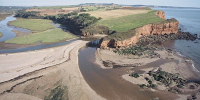
The project focuses on two pilot sites: the lower Otter Valley, East Devon, England (www.lowerotterrestorationproject.co.uk) and the Saâne Valley in Normandy, France.
Improperly managed stormwater can create big issues on your property such as flooding and increased erosion. Learn how to create beautiful rain gardens and other techniques to manage stormwater on your property. Rosmarie Lohnes has been helping landowners in the Maritimes slow erosion and manage overland flow for over 20 years with her award-winning business, Helping Nature Heal Inc. Join Rosmarie for this free webinar to learn how you can improve the water management on your property and build a healthy landscape and shoreline for years to come!
This webinar is a part of Watersheds Canada's free online Freshwater Stewardship Community. By registering for this webinar, you agree to be added to Watersheds Canada online mailing list. You can unsubscribe at any time.

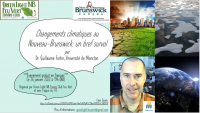 Dr. Guillaume Fortin, geography professor and director of the environmental sciences masters program at the Université de Moncton, will present a brief overview of climate change in New Brunswick.

 Project Coordinator, Natalie Desta will be presenting on the Nashwaak Watershed Association's (NWAI) community-based approach to leave room for the river and restore and conserve native floodplain forested wetlands in Fredericton, New Brunswick.

 Interested in what coastal communities are working on across the vast Atlantic pond?
 Daring to Hope at the Cliff’s Edge: An Active Hope webinar
