
Drilling Down on Cancer: Mapping Fracking’s Impact on Community Health
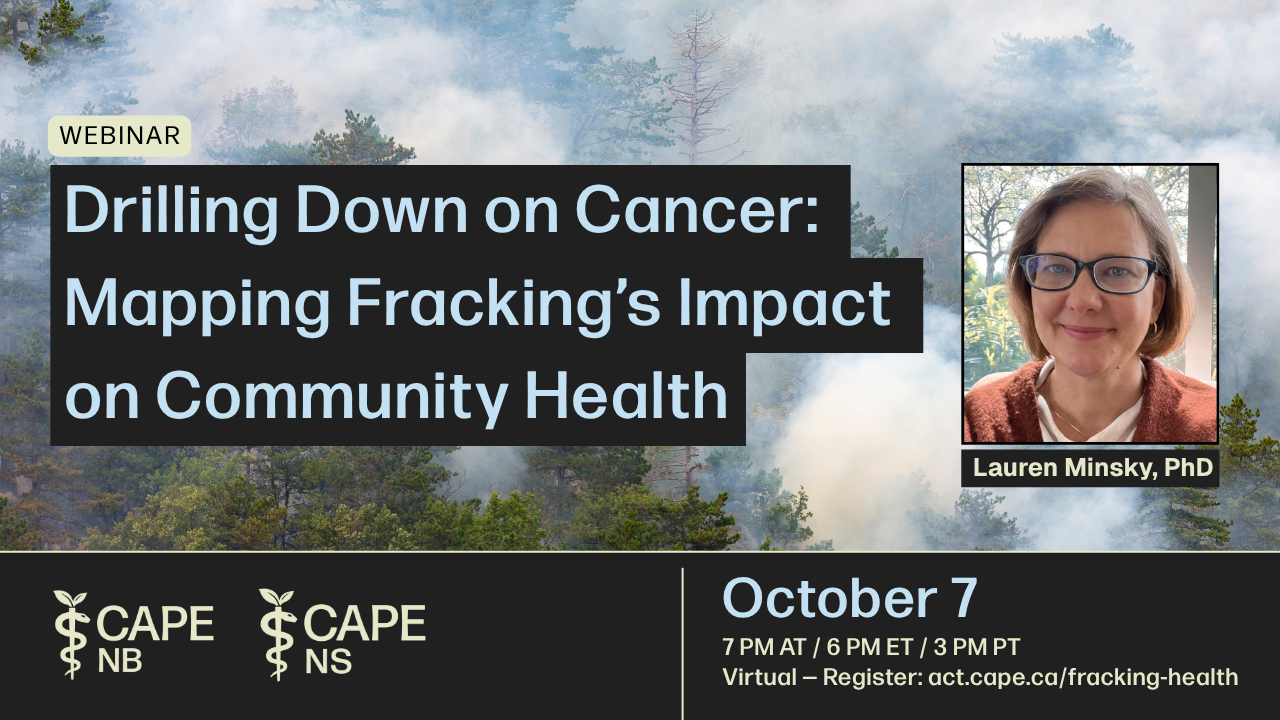
Co-hosted by CAPE Nova Scotia & CAPE New Brunswick
When residents living near oil and gas developments raise alarms about rising cancer rates in their neighbourhoods, their concerns are too often sidelined by industry and governments that frequently write off local cancer spikes as "statistically insignificant."
Join CAPE NS and CAPE NB for an informative webinar with environmental health researcher Dr. Lauren Minsky, who developed the People's Cancer Incidence Screening Tool (PCIST).
Grounded in the belief that “every case of cancer counts and that local community concerns about the prevalence of cancer and pollutant exposures should be taken seriously,” PCIST bridges the gap between official data and lived community experience. During this session, Dr. Minsky will discuss how this validated tool identifies localized cancer "signals"—patterns where rates of cancer rise notably above state or national averages—and helps communities connect those elevations directly to nearby fracking wells and oil and gas infrastructure. She will also share how residents can use place-based reports to push back against regulatory neglect, advocate for their health, and demand accountability.
A Q&A session will follow the presentation.
Featured speaker
Dr. Lauren Minsky
- Lauren Minsky, PhD, is an environmental health scholar who developed the People's Cancer Incidence Screening Tool (PCIST). She spent 20 years teaching environmental health at NC State, NYU, and Haverford College, alongside four years conducting research in a pediatric cancer biology laboratory. She sits on the Scientific Advisory Board for Physicians for Social Responsibility Pennsylvania, and leads PCIST, applying insights from her interdisciplinary background to supporting communities’ health needs.
Event Information
| Event Date | Oct-07-2026 7:00 pm - 8:15 pm |
| Location | Online |
| Categories | Member & Associate Events |
